Megala Antinoeia 2016

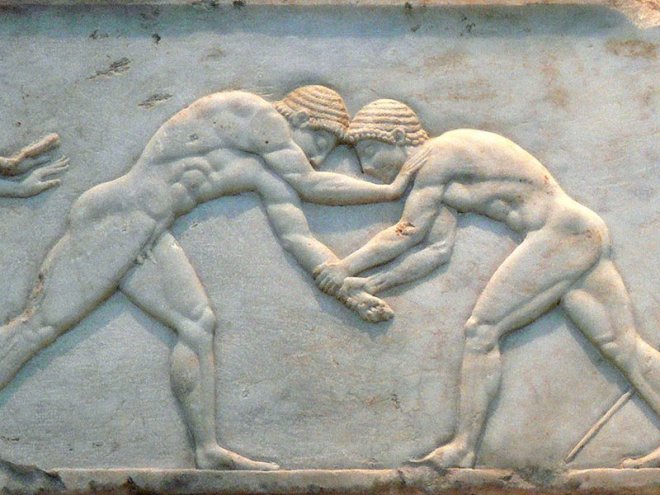
Stater-of-Aspendos-with-two-youths-wrestling-380-325-B.C.-

Blessings on this day, the Megala Antinoeia!

Today is one of the more prominent festivals in the yearly calendar of Festivals for the Ekklesía Antínoou.  In some ways, this festival can be seen as a collection of several festivals and observances and draws inspiration from several sources.  As such, there are many different opportunities and options on how one chooses to observe this greater festival day.  Read more about the Megala Antinoiea at the main festival page here.

In honor of the day, we’re sharing a new piece of ritual poetry written by one of the Magistrates of the Ekklesía, Merri-Todd Webster.  Enjoy!!

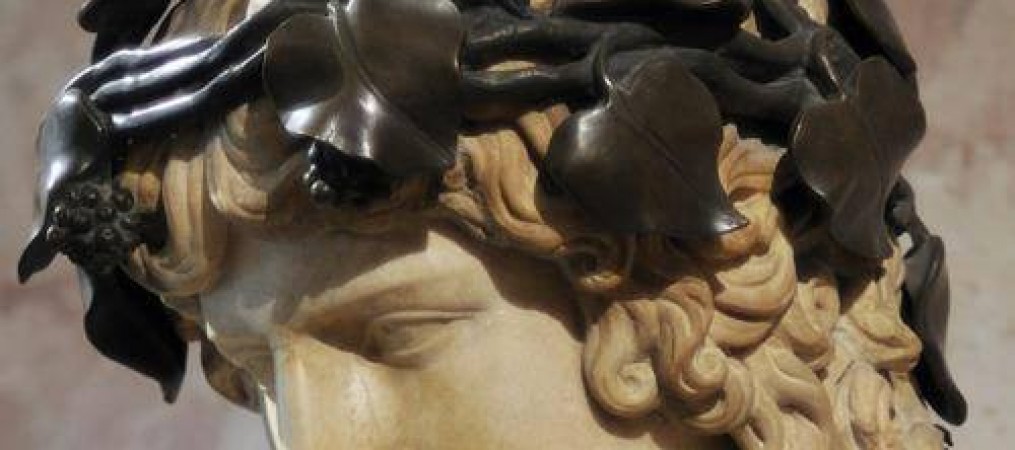
Laudes Antinoi

Praise to Antinous, the Bithynian Boy, the Man God, the Emperor of Peace!

Praise to Antinous, the Liberator, the Navigator, the Lover!

Praise to Antinous, the beloved of Hadrian, beautiful, just, benevolent!

Praise to the Liberator who frees us from our bonds,

who loosens inhibitions, unties the knots of memory,

and strikes down the archons who would hold us thrall!

Praise to the Navigator who crosses the heavens,

who shows us the way, who guides us across!

Praise to the Lover who is lovely and loving,

beloved of an emperor, passionate and loyal!

Praise to Antinous Osiris, Wesar-Antnus,

deified by the Nile, enthroned with the gods

of Egypt, ruler in the Am Duat!

Praise to Antinous Dionysus, the god who comes

dancing, the god who comes singing, the god

who comes rejoicing!

Praise to Antinous Hermes, herald of the gods,

speaker for mortals, host of the eternal banquet

where gods and mortals mingle!

Praise to Antinous Apollon, leader of the Muses,

giver of true prophecy, accurate of aim!

Praise to Antinous Dionysus, loosener of bonds,

bestower of freedom, giver of the vine!

Praise to Antinous Hermes, giver of meaning,

god of interpretation, loosener of the tongue!

Praise to Antinous Apollo, the cleanser,

the purifier, the laser light of truth and freedom!

Praise to Antinous Dionysus, the one who

went into the underworld and returned!

Praise to Antinous Hermes, the reliable guide

of souls!

Praise to Antinous Apollo, who shines his beams

upon the road!

Praise to Antinous Dionysus, lover of women

and men, who deified Ariadne!

Praise to Antinous Hermes, father of Pan,

father of Evander, lover of Krokos!

Praise to Antinous Apollon, father of Aristaios

and Asklepios, tender to those who yield!

Praise to Antinous with Hadrian, eromenos

and erastes, lover and beloved, emperor

and favorite, deus et divus!

Praise to Antinous with Sabina, wife of

Hadrian, the new Ceres, mother of

Roma and of Amor!

Praise to Antinous with Serapis,

Wesar-Hapi-Ankh, spouse of Isis,

meeting place of many gods!

Praise to Antinous with Diana,

the shining huntress, the mistress

of Lanuvium, guardian of the grove.

Praise to Antinous with the Tetrad++,

his children, his grandchildren,

defenders of his people!

Praise to Antinous with the Treiskouroi,

praise to Antinous, Lucius, Polydeukion,

god, sanctus, and hero!

Praise to Antinous with Mantinoe,

his mother, beloved of Hermes,

nurturer of the god and of his people!

Praise to Antinous Agathos Daimon,

the good spirit, the god friend,

the divine potential within us all!

Praise to Antinous Heros,

the beautiful boy who died too soon,

his beauty eternally remembered!

Praise to Antinous Homo Deus,

the man become god, the divine boy

with a mortal memory, the accessible god!

Praise to Antinous Imperator Pacis,

Emperor of Peace, supreme in Antinopolis,

city of peace and friendship!

Praise to Antinous Deus Amabilis,

the lovable god, the lovely one,

beloved and loving to his worshipper!

Praise to Antinous Deus Frugiferus,

the fruitful god, bringing forth

the sweetness of life!

Praise to Antinous! Ave Antinoe!

Praise to Antinous! Vive Antinoe!

Praise to Antinous! Ave Antinous!

This, haec est unde, this is where

life comes from: Haec est unde vita venit!

Antinous_AN00022259_624x352dg

Megala Antinoeia 2016 Approaches

Do you have a poem, a song, or some other piece of art inside of you waiting to come bursting out?  The Ekklesía Antínoou is welcoming submissions of poetry, hymns, songs, visual art, liturgy, and ritual in honor of the Megala Antinoeia festival coming up in just a few short weeks!

athenswrestling.jpg__800x600_q85_crop

The Megala Antinoeia is one the more prominent festivals in the Calendar of Festivals for the Ekklesía, and it’s coming up on April 21st!  This is a festival that includes several elements that are observed together, including the athletic games instituted by Hadrian in honor of Antinous, the coming of Spring, the founding of the Temple of Venus and Roma Aeterna in Rome, bear hunts and the dedication of a bear pelt to Aphrodite and Eros, and the transition of Antinous into his aspect as Antinous the Lover.  It’s a smorgasbord of ritual possibilities!

The Naos Antinoou website now has a page up with information and some resources about the festival.  Check it out here, and check back as resources are added!

Please send us your submissions of poetry, hymns, songs, ritual or liturgical text, or visual art of any kind.  The submissions can be about the Megala Antinoeia specifically or one of its unique elements, or it can be about Antinous and any of his aspects or qualities.  Let your heart be your guide!  We’ll share the submissions on the Naos Antinoou website and facebook page in the week leading up to the Megala Antinoeia.

Submissions can be emailed to ekklesiaantinoou@gmail.com

Blessings to all who read this!!

The Ekklesía Antínoou at Many Gods West

The Ekklesía Antínoou is pleased to announce that the proposal that was submitted to host a discussion and ritual at Many Gods West was accepted!  We will be hosting River Gods West: Antinoan Devotions to Cascadian River Deities.

9.15.10_D7C8606Much of Devotional Polytheism is local practice.  Regardless of where our Gods originated we are often practicing our rites and devotions at our home altars or temples, in our local forests, and in the shadow of our local mountains.  Antinous was made a God in the waters of the sacred Nile River in Egypt, but His devotees are all over the world doing devotion near their own local rivers.  The Ekklesía Antínoou will host a discussion on how to bring wider mythology into local practice, and will invite attendees to participate in a devotional ritual to Antinous that honors River Gods and Antinous, focusing on the spirits and deities of various rivers worldwide, but especially the rivers of the Pacific Northwest and the Deschutes River in Washington that ends in Olympia, Washington.

Many Gods West is a gathering of polytheists of all sorts, consisting of three days of presentations, workshops, panels and rituals, meeting August 5 – 7 in Olympia, WA.  We hope to see you there!

Getting Started with Antinous

“On Antinous will be repeated every ritual of the hours of Osiris together with each of his ceremonies in secret. His teachings will be spread to the whole country, helpful in the instruction and effective in the expression. Nothing comparable has been done for the earlier ancestors until today.”– Obelisk of Antinous

Since you found yourself at Naós Antínoou you might be wondering, “What do these people do and where do I start?” Well, those are very good questions. Members of Ekklesía Antínoou tend to be a very diverse bunch of people. Some of us approach our devotions very loosely, often lighting a candle, burning some incense and saying a prayer while others make their devotions a high liturgical affair informed by historical worship in Ancient Greece, Rome and Egypt complete smells, bells and ornate iconography. There’s no one right or wrong way, necessarily, to establish a devotional relationship with Antinous, but for those who want some direction this guide should be of some assistance.

Before we get started, let’s look at some defining characteristics of Ekklesía Antínoou. As a Graeco-Roman-Egyptian syncretist reconstructionist polytheist group, much of the modern worship of Antinous is informed by reconstructing elements of ancient cult practices of these civilizations. We do know that the Emperor Hadrian was a Hellenophile and likely very much influenced by Greek devotional practices in addition to leading Roman state ceremonies, so we can conjecture that when he established the cult of the beautiful Bythinian boy, these would have been the modalities through which he and others would initially give cultus to Antinous. In the above quote from the Obelisk of Antinous which was located at Hadrian’s villa, we can also see that Antinous’ cult was immediately syncretized with that of the established cult of Osiris meaning that these temples would have approached Antinous’ worship in a way familiar to that of Egyptian temples. For our purposes, then, we can take what we know from each of these different practices and reconstruct a form of personal devotion drawing on elements of the past and apply them to our present day circumstances. 

Getting started you will need at minimum an image of Antinous, a candle, an offering bowl (optional), incense burner, a bowl of clean water, a smaller bowl for salt and either a sprig of dried rosemary or a bay leaf. Arrange a clean space with the image in a central position. If it’s a picture, it should ideally be framed – numerous images can be found online and printed out or you can make your own as a personal devotional offering. Once everything is prepared, spend some time centering yourself and aligning your mind and intentions toward communicating with Antinous. Once you feel sufficiently centered, light the candles and incense and wash your hands and face lightly with the water declaring yourself to be pure. From here a simple prayer to Antinous and offerings may be made. The importance here is to foster communication and devotion. Take your time and be attentive. Here is a simple liturgy that can be done once a week or more as you start exploring your relationship with Antinous.

12010576_10103434060806628_2842825979037350117_o

Photo by Ceinan Kimbrough

A Weekly Antinoan Devotional

Pour clean water into a bowl and add a pinch of salt to the water. Optionally, light a bay leaf or sprig of rosemary and extinguish it into the water, saying:

Be pure!

Wash yourself with the water, touching the appropriate parts of your body, and say:

May I be pure in thought. (forehead)

May I be pure in speech. (tongue)

May I be pure in heart. (chest)

May I be pure in action. (palms of hands)

Next, sprinkle some of the water around your devotional space, saying:

Even at the ends of the earth, you are here, great gods.

Light the candle or lamp to Antinous, burn incense and, optionally make other offerings, saying:

Thus praying always to the Divine Boy,
the Arcadian Greek of Bythinia,

I am made more like you, the lover of Hadrian –

Emperor of the World of Peace;

Defeat every enemy of love

O victorious son of Hermes – may all rejoice! –

And turn the heart of the hateful one

Into a sensible peacemaker.

We pray this through Hadrian, and Sabina, and you.[i]

Here you may ask Antinous to bestow blessings on Ekklesía Antínoou, ask for any personal blessings or perform some devotional activity such as reciting a personal prayer, conversation, poetry, story, or perform other devotional activities.

If inspired you may also perform divination at this time such as Ephesia Grammata [ii] or some other familiar form of divination.

In closing, stand before your shrine and say:

Our time here now has come to its end. To this god Antinous, I give my prayers, supplication and thanks. May all be blessed by he who is beautiful, just and benevolent. Ave, vive Antinoe.

775609_480346238692070_153053925_o

As you can see, starting a devotional practice doesn’t need to be an overly ornate affair, rather one that is heart-felt and intentional. As you deepen your relationship with Antinous and the related divine figures of Ekklesía Antínoou, you may modify the above ritual to also include their commemoration as well. Establishing a devotional practice can likewise be taken into other realms of activities. For example, as Antinous is a god of love (not just same-sex love!), one may dedicate dating activities or working for marriage equality to him; alternately, as a god of beauty, one may dedicate art, poetry and songs to him; as a god of athleticism and sport, swimming or other athletic activities may be an offering[iii]; . The possibilities are near endless.

Establishing a regular devotional practice is a powerful way to deepen your relationship with Antinous or any god or divine power. Over time it facilitates a process of reciprocity and focus allowing us to become more like the gods and powers that we serve and have them assist us in our daily lives. Hopefully this short essay will help you in becoming closer to the beautiful Bythinian boy.


BIO

Otter (Seattle) is a spiritual worker, artist, and writer, mystes of Ekklesía Antínoou since 2009, and student of the Anderson Faery tradition. He hosts regular Antinoan celebrations on a monthly basis as well as holy days sacred to Antinous, and works behind the scenes as an Antinoan liturgist and dedicated Lupercus.

[i] P. 56-57. P. Sufenas Virius Lupus, Devotio Antinoo: The Doctor’s Notes, Volume One (Anacortes: The Red Lotus Library, 2011).

[ii] P. Sufenas Virius Lupus, Ephesia Grammata: Ancient History and Modern Practice. (Anacortes: The Red Lotus Library, 2014)

[iii] I often say a quick prayer before going to the gym asking Antinous to bless my focus and efforts and spill some water from my bottle outside.

Stella Antinoi 2016

stellaantinoi

Today in the Ekklesía Antínoou we celebrate the Festival of Stella Antinoi, or “Star of Antinous.” Stella Antinoi is the day we observe as the first sighting of the star dedicated to Antinous in 131. This star first appeared in the constellation of Aquila, which, as a result, was later named Antinous/Ganymede. This festival  inaugurates the aspect of Antinous as the Navigator. In our own modern Antinoan practices, we recognize three aspects of Antinous: Antinous the Liberator, Antinous the Navigator, and Antinous the Lover. After Foundation Day on October 30th, Antinous assumes his role as Antinous the Liberator and, after facing death and becoming a god, begins his long struggle against the archons, daimones, and forces of oppression.  Today, we see Antinous find “victory” in his role as Liberator and transition to Antinous the Navigator, where he gently and subtly guides us and urges us to use the liberation we have been able to achieve in ways that are beneficial for ourselves and others living in the world around us.

This day can be marked in a number of different ways.  If you are at home at your personal altar, the inclusion of several candles is always nice.  I like to place tea light candles all around the room and offer prayers to Antinous.  Another nice way to mark the day is to find a high spot near where you live where you can observe the stars or even the lights of the city.  And, of course, spoken prayers are always nice.

However you celebrate this festival, may you feel the gentle and present guidance of Antinous in your life, this day and always!!

– Christodelphia Mythistórima (Sister Krissy Fiction)